
Hardwood Floor Staining & Custom Colors
Custom on-floor stain sample consultations to achieve your ideal shade and tone. Serving residential homeowners across Powder Springs, Cobb County, and metro Atlanta.
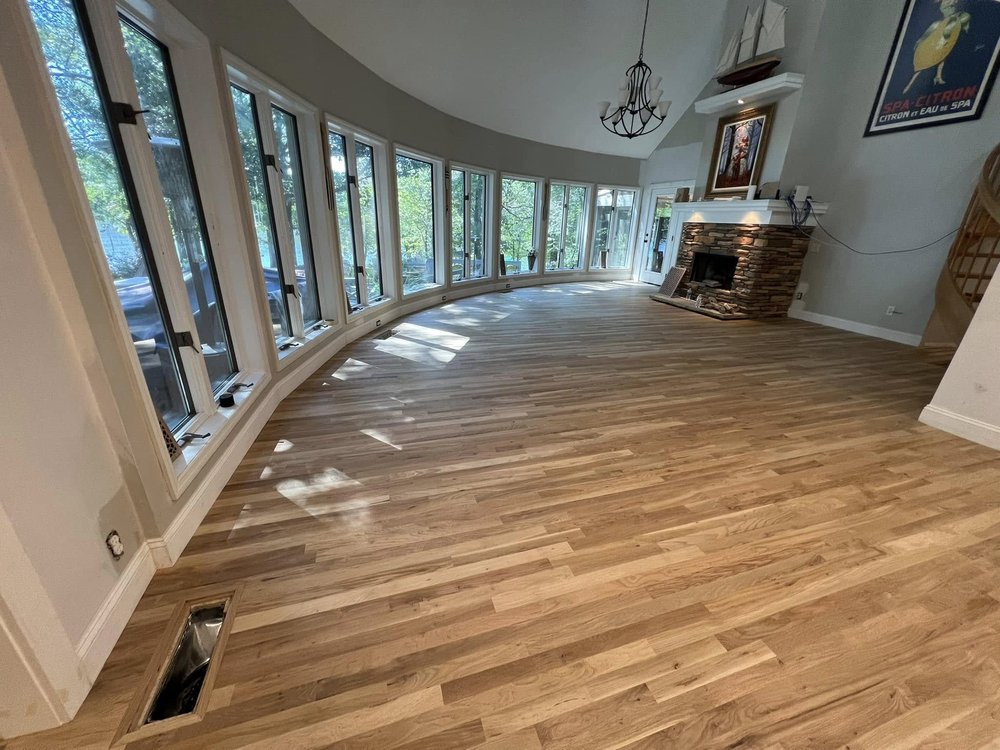
Hardwood Floor Staining
Stain is where a refinish becomes a transformation. The same sanded floor can go warm and honey toned, deep and rich, or natural and bright depending on the stain you choose, and the right choice depends on the wood species, the light in the room, and how you want the home to feel. At Wala Hardwood Floors LLC, we help homeowners across Powder Springs, Cobb County and metro Atlanta choose stains that actually work on their floors.
Stain is not paint. It does not sit on top of the wood and hide it. It soaks in and interacts with the grain, which means the same stain looks completely different on red oak, white oak, hickory, and maple. Choosing a stain from a fan deck in a showroom is not the same as seeing it on your actual floor, and that gap is where most stain disappointment comes from.
We work residential only, we give free in home quotes, and we are available Monday to Saturday from 8:00 AM to 6:00 PM. Our approach to staining is to test on your real floor so the color you choose is the color you actually get.
Why Different Species Take Stain Differently
Red oak and white oak are the two most common floor woods in metro Atlanta homes, and they take stain very differently. Red oak has a more open grain and tends to pull stain darker and warmer, while white oak has a tighter grain and takes stain more evenly, which is why it has become popular for lighter, calmer tones. A stain that looks rich on red oak can look flat or green on white oak.
Hickory has dramatic natural color variation and a bold grain that fights some stains, while maple has a tight, closed grain that resists stain and can look blotchy if the wood is not prepared correctly. Knowing your species is the first step in choosing a stain that will actually perform, and we identify the wood before we talk color.
Sample Spots on Your Own Floor
The only honest way to choose a stain is to see it on the actual floor it will live on. We apply sample spots of the stains you are considering directly on your sanded floor, let them dry, and look at them in the actual light of the room at different times of day. A stain that looks perfect at noon can read completely differently in evening lamplight.
This is the step that prevents the most common staining regret: choosing a color from a small chip in a showroom and being surprised when it lands on a full floor. Sample spots on your real wood, in your real light, with your real furnishings nearby, take the guesswork out of the decision.
Trends Versus Timeless Tones
Stain trends come and go. The deep reddish browns of one decade give way to the gray and whitewashed tones of another, and what looks current today can read dated in ten years. We talk through the difference between a stain that is on trend and a stain that is timeless, and we help you think about how long you plan to keep the floor.
Timeless tones tend to sit closer to the natural color of the wood: warm mid browns, natural clear finishes, and restrained stains that let the grain do the talking. Trend tones can be beautiful and make a home feel fresh and current, and there is nothing wrong with choosing one, as long as you go in knowing it is a trend. We help you make that call with your eyes open.
Matching Mixed Species
It is surprisingly common to find that a floor is not one species but two, often red oak and white oak mixed together, and the mismatch only becomes obvious once the old finish is sanded off and the two woods react to the same stain differently. This is exactly the situation one of our customers described, and we helped them find a stain that pulled the two tones closer so the floor read as one.
Matching mixed species is not about finding a stain that makes two woods identical, which is usually impossible. It is about finding a stain that minimizes the contrast and lets the floor read as a cohesive surface. We test on both species present and choose a color that bridges them rather than exaggerating the difference.
Stain, Finish, and the Order of Operations
Stain and finish are two separate steps, and confusing them leads to problems. Stain is the color that soaks into the wood. Finish is the clear protective coat that goes over the stain to seal it and protect it from wear. The stain does not protect the floor, the finish does, and the finish goes on after the stain has dried.
We talk through how the stain color and the finish sheen interact, because a matte finish over a dark stain reads differently than a gloss finish over the same stain. The combination of stain color and finish sheen is what produces the final look, and we help you choose both with the end result in mind.
"Maggie and the team are thorough, friendly and great communicators. When we met them for a quote, it was evident that they were knowledgeable about their craft. They kept us up to speed throughout their process and even helped us find the best fit for a stain color when we learned our hardwoods were mismatched red and white oak. They got their work done on the timeline that they estimated, were always timely and present when they said they would be, and were very detail oriented. Highly recommend to anyone needing flooring refinished!"
How We Approach Staining Your Floor
Our staining process is built around testing on your real floor so the color you choose is the color you get.
- 1
Quote and Species Identification
We inspect the floor, identify the wood species, and talk through the color direction you have in mind. You get a clear quote.
- 2
Sample Spots on the Real Floor
We apply sample spots of your candidate stains directly on the sanded floor and look at them in the actual room light at different times of day.
- 3
Stain Application
Once you choose a color from the real samples, we apply the stain evenly across the floor, working in sections so the color reads consistent.
- 4
Dry Time and Topcoat
We let the stain dry properly, then apply the protective topcoats over it with the right dry time between each coat.
- 5
Walkthrough and Care Guidance
We walk the finished floor with you, confirm the color reads as expected, and explain the dry and cure period.
Is Staining Right for My Floor?
Staining is the right call when you want to change the color of your hardwood during a refinish, when you want to update a dated orange toned floor to a fresher tone, or when you need to bridge mixed species so the floor reads as one. It is the step that turns a refinish into a true transformation.
It is not always necessary. Many homeowners choose a natural finish with no stain, letting the wood's own color and grain show through, and that is a beautiful and timeless choice too. We help you decide whether a stain is right for your floor or whether natural is the better play, and we never push a stain a floor does not need.
Explore Stain Colors by Species
Toggle the wood species to see how common stain tones shift. Screen colors are a guide only. Stain always looks different on your own floor, so we test sample spots before you choose.
Open grain pulls stain darker and warmer. Takes color readily and reads rich.
Natural
on Red Oak
Nordic
on Red Oak
Golden Oak
on Red Oak
Provincial
on Red Oak
Special Walnut
on Red Oak
Dark Walnut
on Red Oak
Jacobean
on Red Oak
Ebony
on Red Oak
Classic Gray
on Red Oak
Screen colors are a guide only. Stain always looks different on your own floor, so we test sample spots before you choose. Learn how we stain your floor.
Prefer the full page? Open the Stain Color Explorer.
Service Area Coverage
Based in Powder Springs, GA, we provide hardwood floor staining to homes in Cobb County (Powder Springs, Austell, Marietta, Mableton, Kennesaw, Smyrna, Acworth), Paulding, Douglas, Carroll, North Metro, and South Metro Atlanta. See the full list on our service areas page.
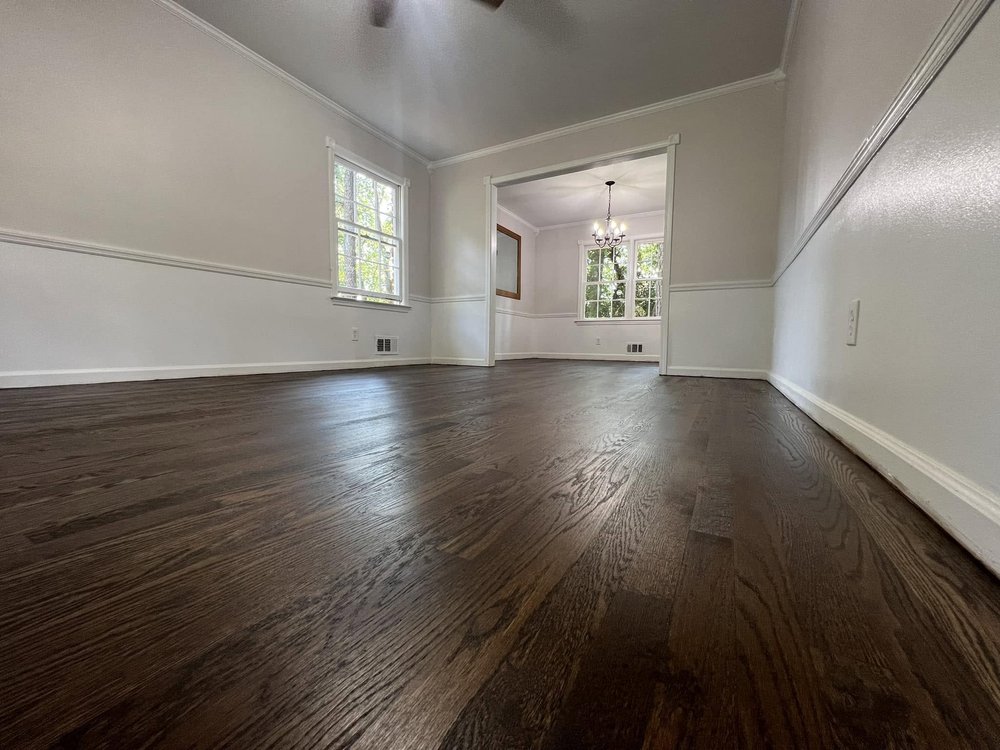
Hardwood Floor Staining
Hardwood floor ready for stain sampling by Wala Hardwood Floors
Get Your Free Quote
Tell us about your residential flooring project. We respond promptly Monday to Saturday.
Hardwood Floor Staining FAQ
Why does the same stain look different on red oak and white oak?
Red oak has a more open grain and pulls stain darker and warmer, while white oak has a tighter grain and takes stain more evenly. A stain that looks rich on red oak can look flat or even green on white oak, so knowing your species is the first step.
How do I choose a stain color I will actually like?
The only honest way is to see it on your actual floor. We apply sample spots of your candidate stains directly on the sanded floor and look at them in the real room light at different times of day, so the color you choose is the color you get.
What if my floor is mixed red and white oak?
It is common to find a floor is two species once the old finish is sanded off, We help you find a stain that minimizes the contrast and lets the floor read as a cohesive surface, testing on both species and choosing a color that bridges them.
Should I pick a trendy stain or a timeless one?
It depends on how long you plan to keep the floor. Trendy tones can make a home feel fresh and current but can read dated in time. Timeless tones sit closer to the natural wood color and let the grain do the talking. We help you make the call with your eyes open.
Does stain protect my floor?
No. Stain is the color that soaks into the wood. The clear protective finish that goes over the stain is what seals and protects the floor from wear. We apply the finish after the stain has dried, and the combination of stain color and finish sheen produces the final look.
Can I stain maple or hickory floors?
Yes, but they behave differently. Hickory has dramatic natural color variation and a bold grain that fights some stains, while maple has a tight, closed grain that resists stain and can look blotchy if the wood is not prepared correctly. We account for the species when we plan the stain.
Can I just go natural with no stain?
Absolutely. A natural finish with no stain lets the wood's own color and grain show through, and it is a beautiful, timeless choice. We help you decide whether a stain is right for your floor or whether natural is the better play.
Pair This With
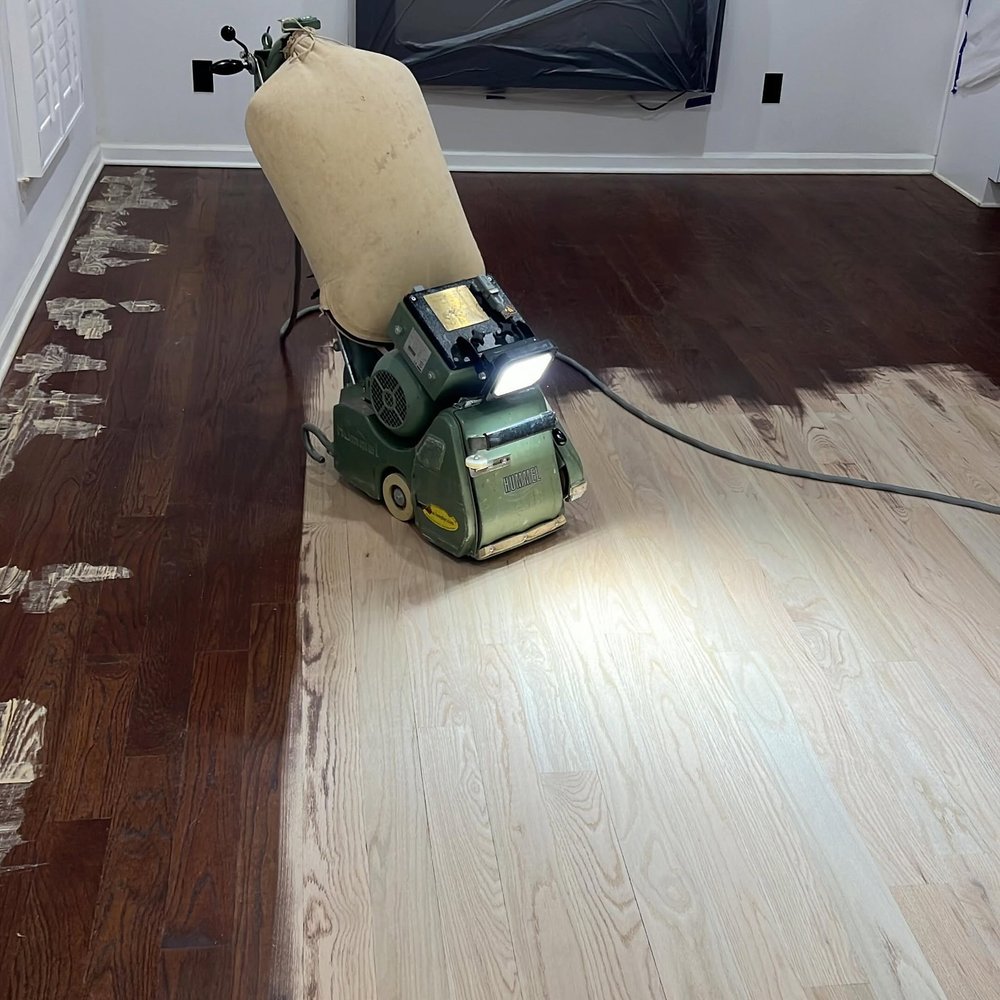
A Stain Chosen on Your Real Floor
Sample spots on your actual wood, in your actual light, take the guesswork out of choosing a stain color.