
Hardwood Floor Polishing & Buff and Recoat
Deep surface buffing and luster rejuvenation to refresh intact finish layers. Serving residential homeowners across Powder Springs, Cobb County, and metro Atlanta.
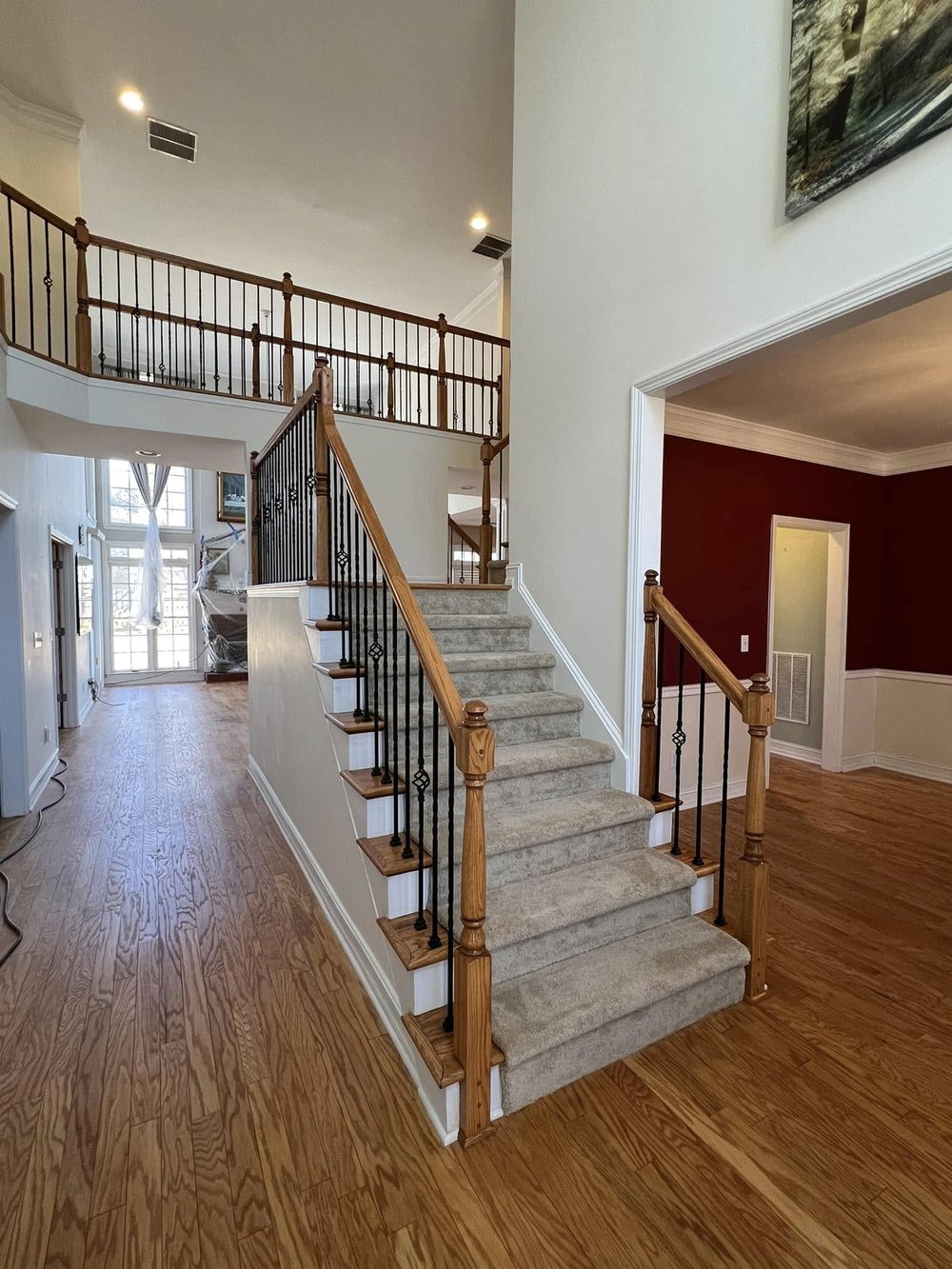
Hardwood Floor Polishing
Not every tired floor needs a full sand and refinish. When the wood underneath is sound and the damage is only in the topcoat, a buff and recoat, sometimes called a screen and recoat, is a lighter, faster, more economical way to bring the shine back. At Wala Hardwood Floors LLC, we do buff and recoat work on residential floors across Powder Springs, Cobb County and metro Atlanta, and our two person team has been doing it since 2021.
A buff and recoat lightly abrades the existing finish so a new coat of finish can bond to it, then applies a fresh topcoat. It does not sand down to raw wood, it does not change the stain color, and it does not remove deep scratches. It is a maintenance step, not a full restoration, and it works beautifully when the floor is a candidate for it.
We work residential only, we give free in home quotes, and we are available Monday to Saturday from 8:00 AM to 6:00 PM. We are honest about whether your floor is a buff and recoat candidate or whether it needs more, because applying a recoat to a floor that is not ready for one makes things worse, not better.
When a Buff and Recoat Works
A buff and recoat works when the existing finish is dull, lightly scuffed, or showing its age, but the wood underneath is not scratched, stained, or damaged. If the finish has worn thin but the wood is still intact, lightly abrading the old finish and applying a fresh topcoat restores the shine and extends the life of the floor without the cost and disruption of a full sand.
This is the ideal maintenance step for a floor that was refinished a few years ago, has been well cared for, and is starting to look a little tired in the main walkways. A buff and recoat brings back the luster and adds a fresh layer of protection, and it costs a fraction of a full refinish.
When a Buff and Recoat Will Not Work
A buff and recoat will not work when scratches have gone through the finish and into the wood, because a recoat does not remove wood damage. It will not remove deep gouges, pet stains that have blackened the wood, water marks, or areas where the finish has completely worn through to bare wood. In those cases a full sand and refinish is the right call.
It also will not change your stain color, because it does not sand down to raw wood. If you want to go from a dark stain to a light natural finish, a buff and recoat cannot do that. We tell you honestly during the quote whether your floor is a candidate for a buff and recoat or whether it needs a full refinish, because the wrong choice wastes your money.
Why Store Bought Floor Polish Causes Problems
Store bought floor polish and restorer products promise to restore shine quickly, and they can make a floor look better for a short time, but they create a serious problem down the road. These products lay down a layer of wax, silicone, or acrylic on top of the finish, and that layer prevents a new coat of polyurethane from bonding to the floor.
When a floor that has been treated with these products needs a real buff and recoat or a refinish, the contamination can cause the new finish to peel, flake, or reject entirely. Removing that buildup often requires a full sand down to bare wood, turning what should have been a light maintenance job into a full refinish. We talk through this honestly because the short term shine from a store bought polish can cost you a lot more later.
The Maintenance Schedule That Extends a Finish
A well maintained finish can last for years longer than a neglected one, and a buff and recoat is part of that maintenance schedule. Rather than waiting until a floor is completely worn and needs a full refinish, periodic recoats keep the protective layer fresh so the wood underneath never gets exposed and damaged.
How often a floor needs a recoat depends on traffic, household size, pets, and how the floor is cleaned. A high traffic entry may need attention sooner than a formal living room. We help you think about a maintenance schedule that fits your home so you get the longest life out of each finish cycle.
Polishing Versus Buff and Recoat
There is a difference between a true buff and recoat and a simple polishing. A buff and recoat abrades the existing finish and applies a new coat of real polyurethane, which actually rebuilds the protective layer. A simple polishing or buffing only shines the existing finish without adding protection, and the effect is temporary.
We focus on the buff and recoat because it actually extends the life of the floor. A shine only polish makes the floor look better for a short time but does not add protection, and it can even leave residue that complicates a future recoat. We are clear about the difference so you know exactly what you are getting.
How We Run a Buff and Recoat
A buff and recoat is lighter than a full refinish, but it still follows a careful sequence to make sure the new coat bonds properly.
- 1
Quote and Candidate Check
We inspect the floor and confirm it is a buff and recoat candidate, with no scratches into the wood, no contamination, and no need for a color change. You get a clear quote.
- 2
Clean and Check for Contamination
We clean the floor and check for wax, silicone, or polish product buildup that would prevent a new coat from bonding.
- 3
Light Abrasion
We lightly abrade the existing finish so the new topcoat can bond to it, without sanding down to raw wood.
- 4
Recoat Application
We apply a fresh coat of polyurethane over the abraded finish, building back the protective layer.
- 5
Dry and Cure Guidance
We walk you through the dry time and cure period so the new coat reaches its full hardness without being marked early.
Is a Buff and Recoat Right for My Floor?
A buff and recoat is the right call when your finish is dull or lightly scuffed but the wood underneath is sound and not scratched, stained, or damaged. It restores the shine, rebuilds the protective layer, and costs a fraction of a full refinish, with less disruption to your home.
It is not the right call when scratches have gone into the wood, when there are pet stains or water marks, when the finish has worn through to bare wood, or when you want to change the stain color. In those cases a full sand and refinish is the honest answer. We tell you plainly during the quote which path fits your floor, and we will not sell a recoat a floor is not ready for.
Service Area Coverage
Based in Powder Springs, GA, we provide hardwood floor polishing to homes in Cobb County (Powder Springs, Austell, Marietta, Mableton, Kennesaw, Smyrna, Acworth), Paulding, Douglas, Carroll, North Metro, and South Metro Atlanta. See the full list on our service areas page.
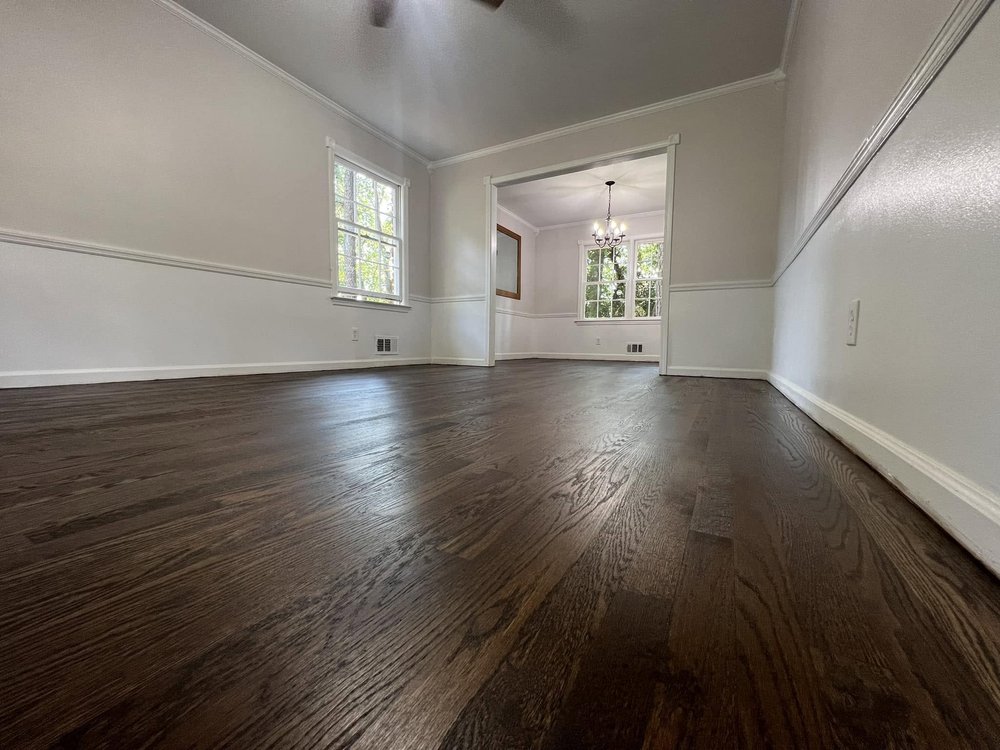
Hardwood Floor Polishing
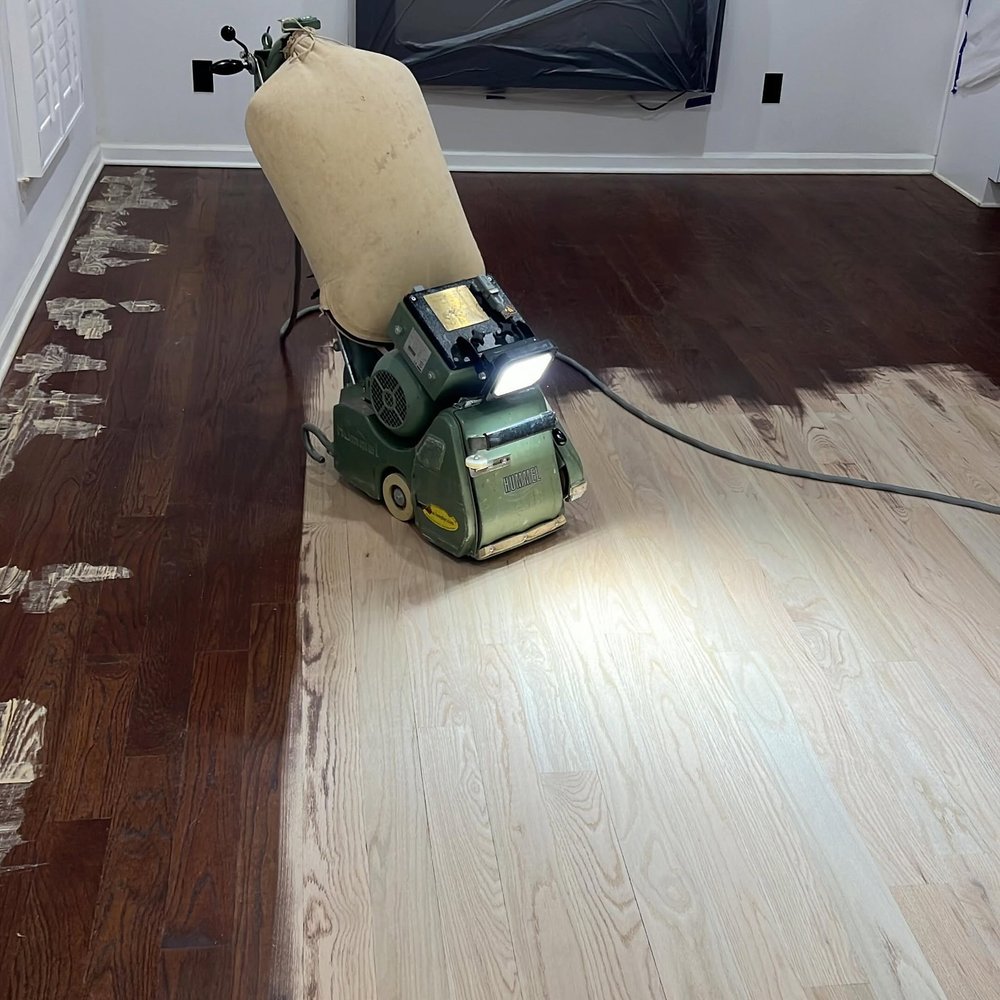
Hardwood floor being buffed before a recoat by Wala Hardwood Floors
Get Your Free Quote
Tell us about your residential flooring project. We respond promptly Monday to Saturday.
Hardwood Floor Polishing FAQ
What is the difference between a buff and recoat and a full refinish?
A buff and recoat lightly abrades the existing finish and applies a fresh topcoat without sanding to raw wood, so it does not remove deep scratches or change the stain color. A full refinish sands down to clean wood and lets you change color and remove damage. The buff and recoat is a maintenance step, not a full restoration.
When does a buff and recoat work and when does it not?
It works when the finish is dull or lightly scuffed but the wood is sound. It will not work when scratches have gone into the wood, when there are pet stains or water marks, when the finish has worn through to bare wood, or when you want to change the stain color.
Can a buff and recoat change my stain color?
No. A buff and recoat does not sand down to raw wood, so it cannot change the stain color. If you want to go from a dark stain to a light natural finish, you need a full sand and refinish.
Why do store bought floor polish products cause problems?
They lay down wax, silicone, or acrylic that prevents a new coat of polyurethane from bonding, When the floor later needs a real recoat or refinish, the contamination can cause the new finish to peel or reject, and removing it often requires a full sand to bare wood.
How often should I buff and recoat my floors?
It depends on traffic, household size, pets, and cleaning habits, Periodic recoats keep the protective layer fresh so the wood underneath never gets exposed, A high traffic entry needs attention sooner than a formal living room, and we help you plan a schedule that fits your home.
Is polishing the same as a buff and recoat?
No. A buff and recoat abrades the finish and applies a new coat of real polyurethane, which rebuilds the protective layer. A simple polishing only shines the existing finish without adding protection, and the effect is temporary. We focus on the buff and recoat because it actually extends the life of the floor.
How can I tell if my floor needs a buff and recoat or a full refinish?
If the finish is dull or lightly scuffed but the wood is not scratched, stained, or damaged, a buff and recoat is enough. If scratches have gone into the wood, there are stains, or the finish has worn through, a full refinish is the honest answer. We tell you plainly during the quote which path fits your floor.
Pair This With
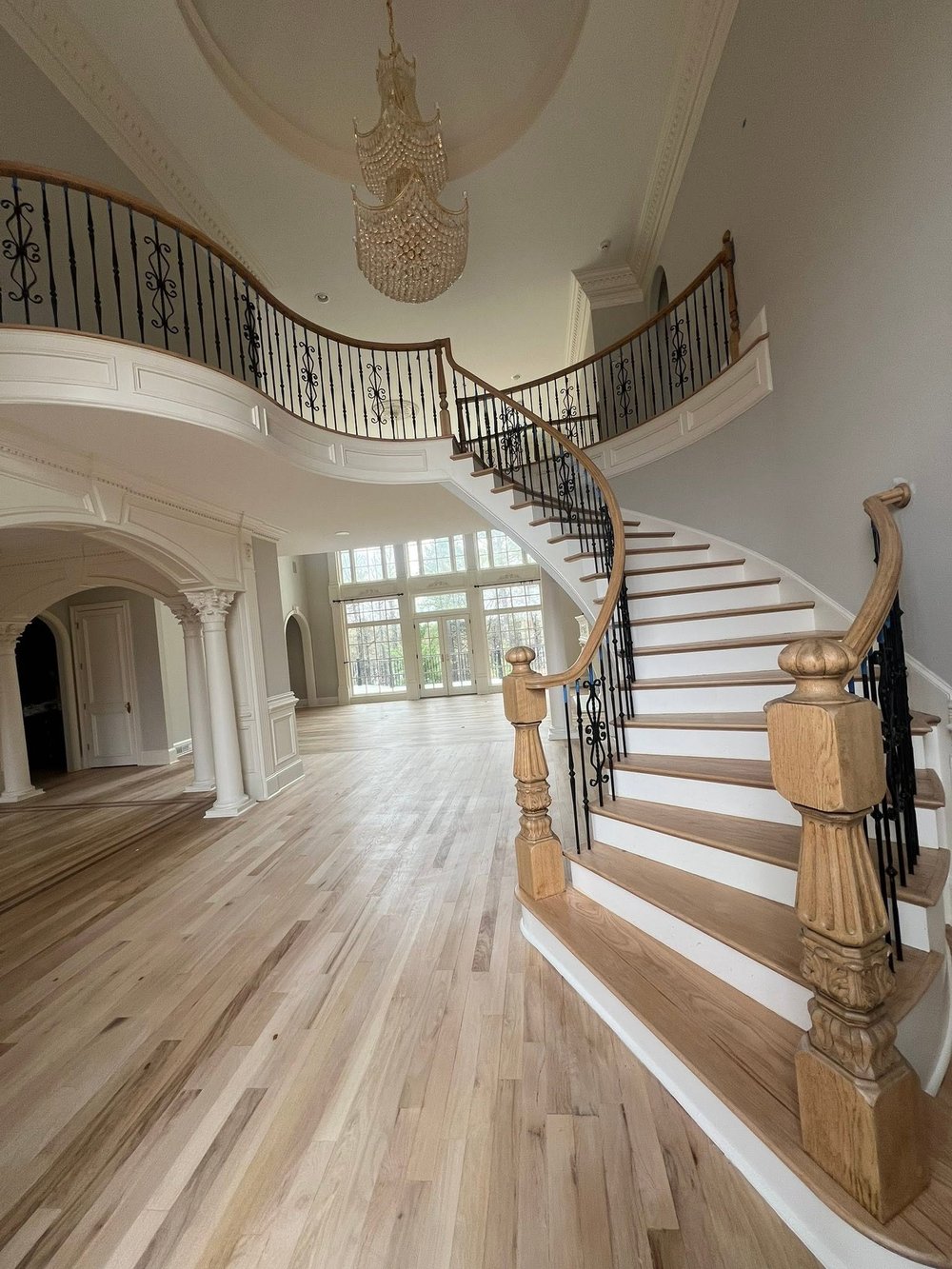
Refresh the Finish Without a Full Sand
A buff and recoat restores the shine and rebuilds the protective layer for a fraction of a full refinish, when the floor is a candidate for it.